
Green Timber Tree Surgery - Brighton Website Rebuild Case Study
Green Timber Tree Surgery is a Brighton-based tree surgery business run by Adam King, an arborist with around 20 years in the trade.
What started as a conversation about a few small website updates and some SEO tweaks turned into something much bigger.
The old site looked reasonably presentable and already had decent search visibility. Behind the scenes, though, it was running on an unsupported and increasingly fragile Joomla installation.
I got access back, protected everything that was already working, and rebuilt the site on Squarespace with clearer services, stronger mobile usability and SEO built into the structure from day one.
The completed website can be viewed here: Green Timber Tree Surgery
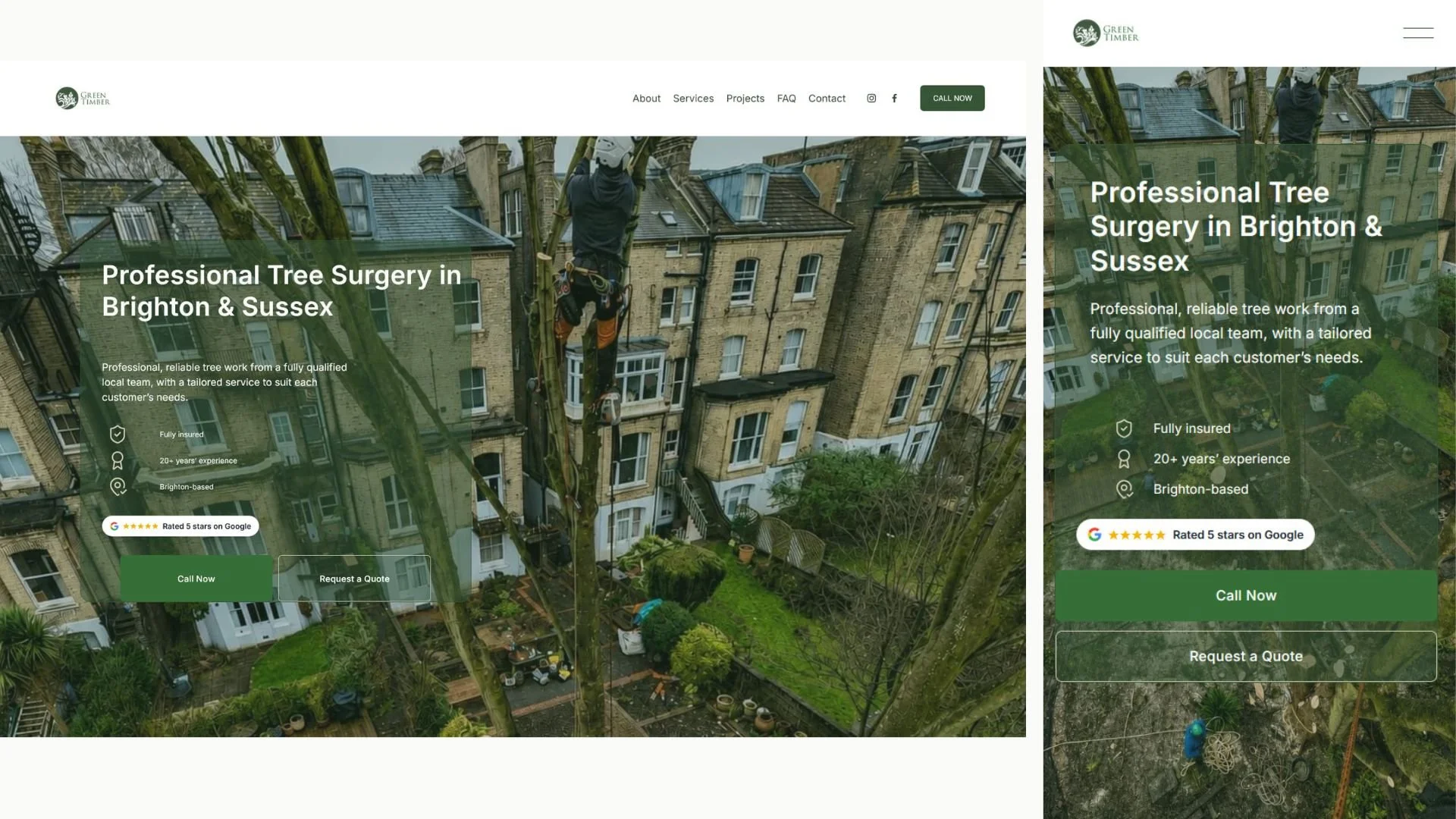
The rebuilt Green Timber website, designed to make services, trust signals and enquiry options clear across desktop and mobile.
Project Summary
Client: Green Timber Tree Surgery
Location: Brighton and Sussex
Sector: Tree surgery and arboriculture
Platform: Squarespace 7.1
Project: Website rebuild and SEO-sensitive migration
Additional work: Google Business Profile optimisation, copywriting, GA4 setup, contact-form fix
Core focus: Replacing a fragile legacy website without losing the visibility it had already earned
The Challenge
Green Timber's old website was around six years old. Dated in places, but not obviously failing: it had useful content, ranked for relevant searches, and sat alongside a Google Business Profile with around 30 five-star reviews already generating work.
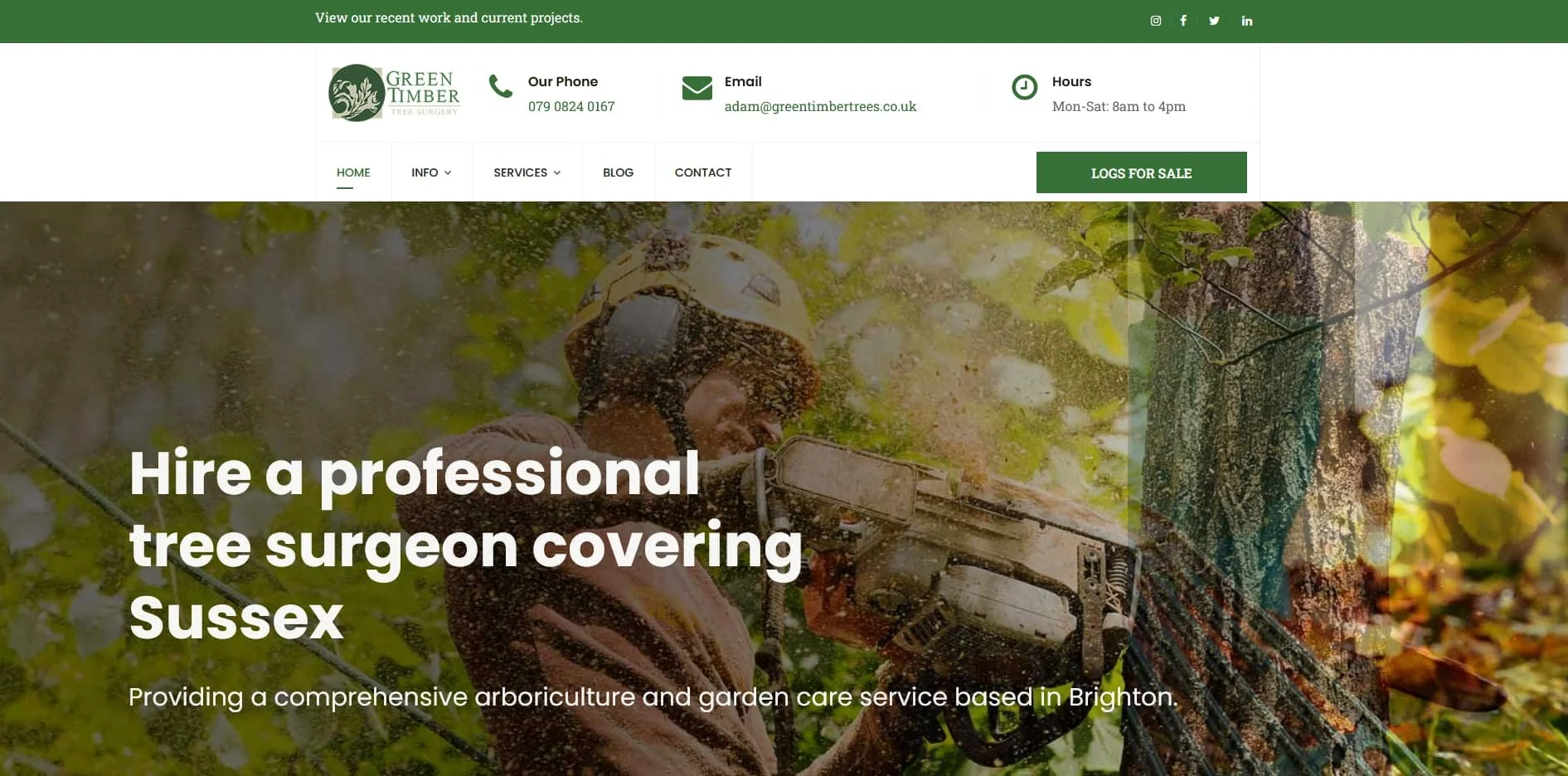
The previous website looked reasonably presentable from the outside, despite the fragile and outdated system behind it.
The real problem surfaced when Adam tried to make a change and found he couldn't log in. He assumed the site had been built in WordPress. The original agency had gone out of business, and the one-time handover link they'd sent years earlier had long since expired.
I worked through the 20i hosting panel, created a new Joomla superuser account via PHP, and restored access. Only then did it become clear the site had actually been built in Joomla, not WordPress.
Inside, it was fragile. Joomla, PHP and several extensions all needed updating, and they were interdependent enough that changing one risked breaking another. The site was still live, but there was no safe way to maintain it and no agency left to call.
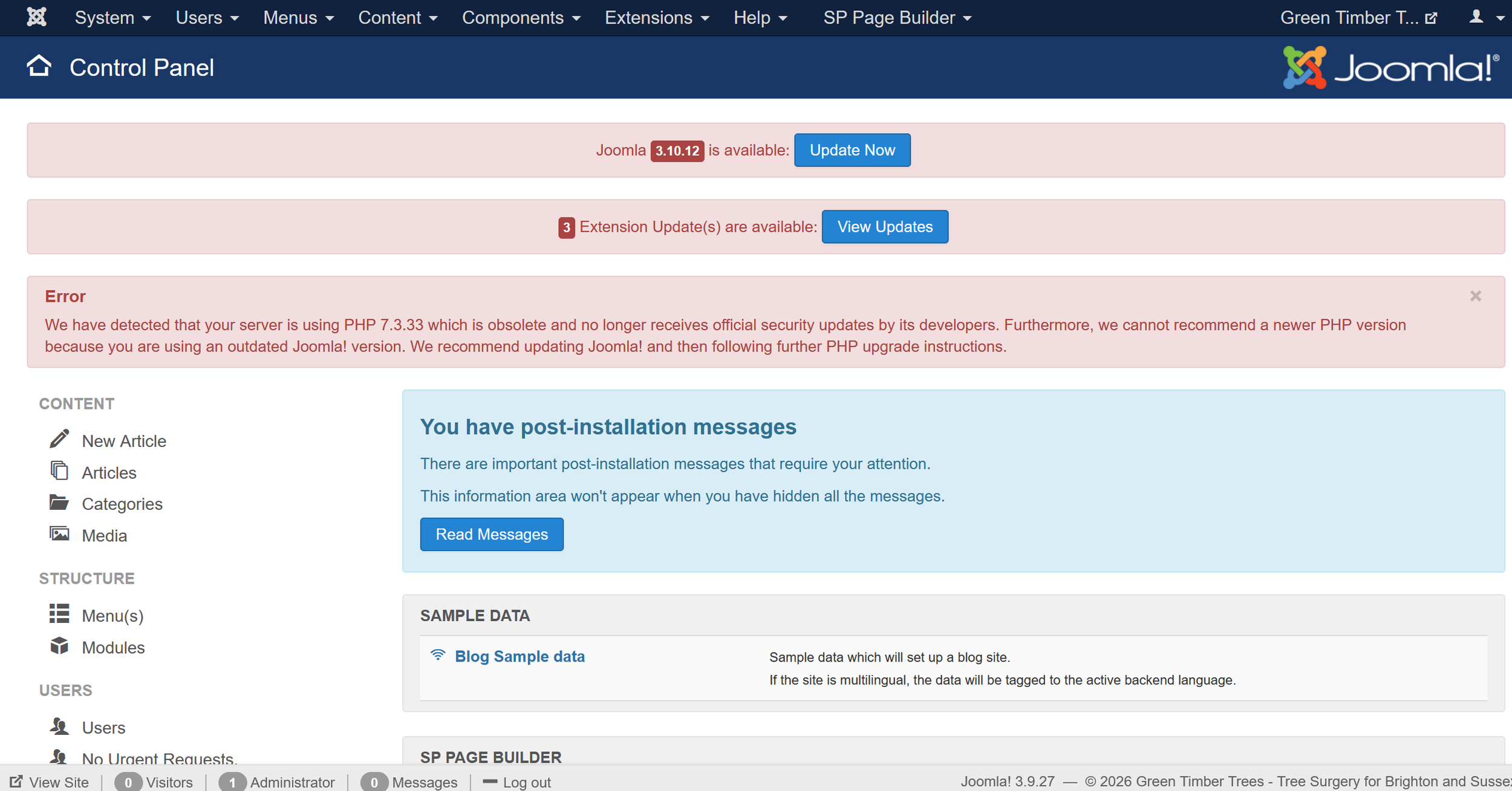
The Joomla installation, extensions and PHP environment were all outdated, leaving no safe route for routine maintenance.
At the same time, the site had genuine SEO value worth protecting. So this was never simply “replace an old website.” It meant rebuilding it without losing what it had already earned.
Adam's interest wasn't really about more traffic for its own sake. Tree surgery is seasonal, quieter from around November to February, and he wanted a website that could help smooth that out.
I explained SEO isn't a quick fix: it's closer to paying a mortgage than renting. Slower, but it builds an asset you actually own.
The Approach
Protecting what already worked
Before touching any design, I downloaded a full backup and ran Screaming Frog across the existing site to record every page and URL.
Then I went through Google Search Console to see exactly which pages and searches were already generating visibility, and where there was untapped potential.
That research shaped the new structure and the redirect plan. The stump grinding page, for example, was getting decent impressions but few clicks: a sign there was demand the old page wasn't converting. Rather than copy it across, I expanded and reworked it. Every important old URL was mapped to a new page, with 301 redirects prepared before launch.
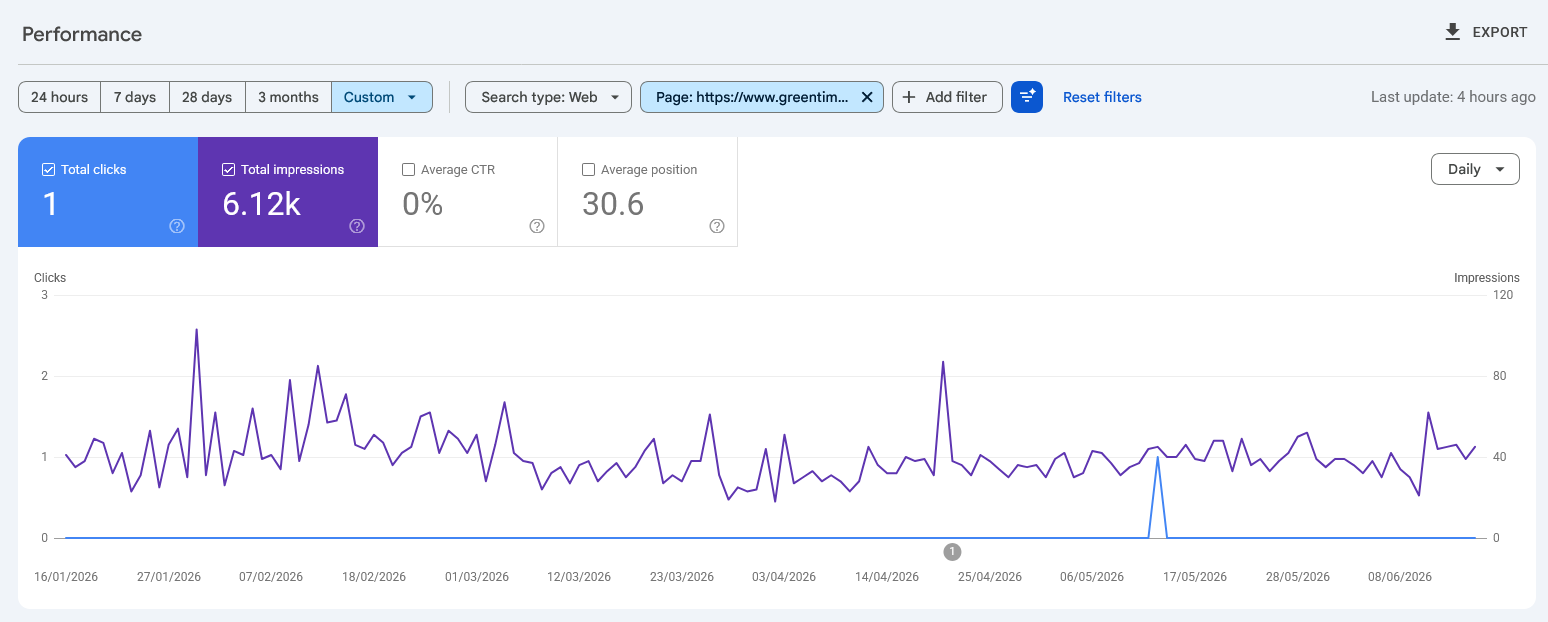
The old stump grinding page had generated more than 6,000 impressions but almost no clicks, showing clear search demand that the page was not converting.
Clearer services and content
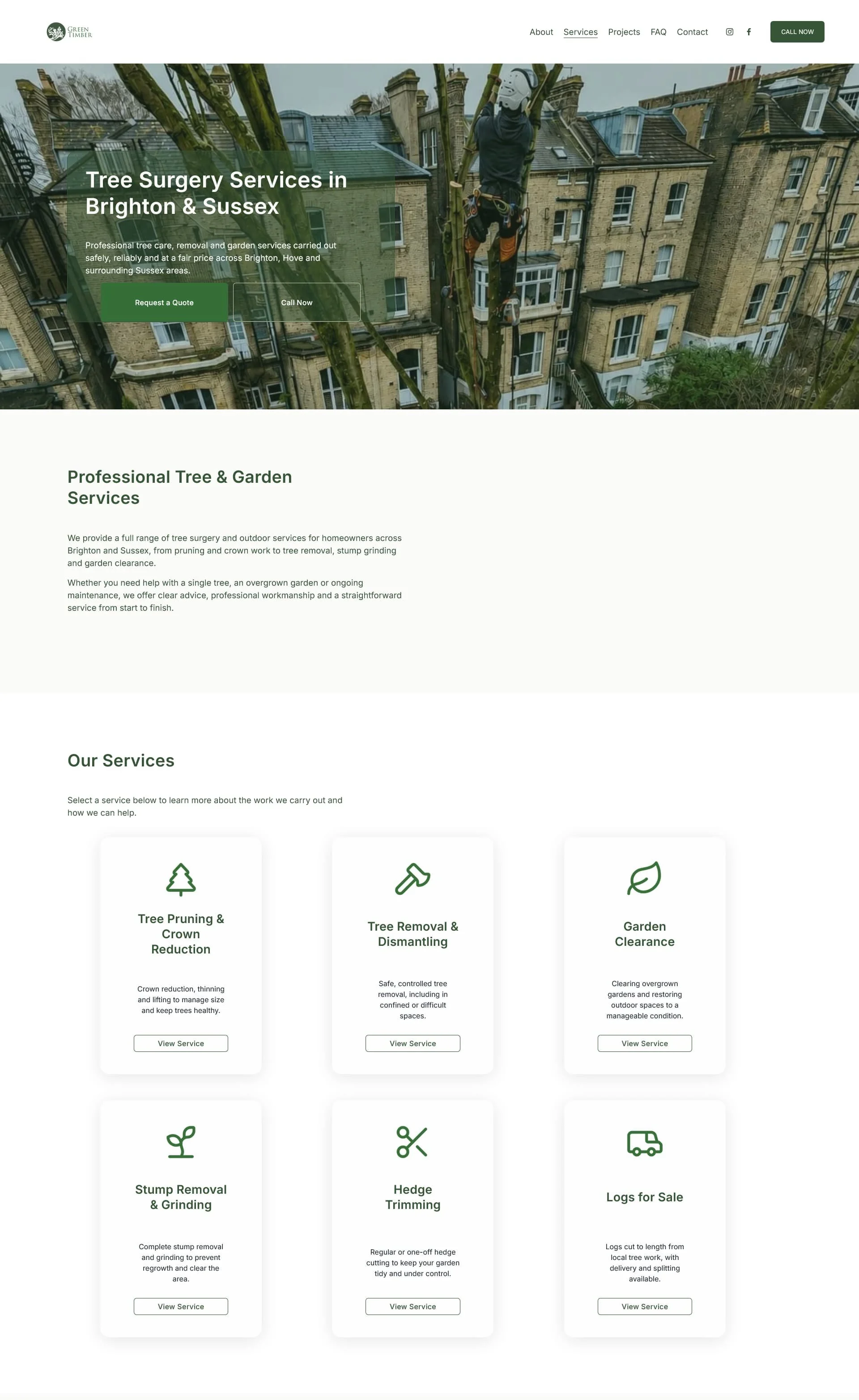
The new site is built around a central services hub and six individual service pages. Some existing content just needed restructuring; other pages, like stump grinding and removal, needed a proper expansion.
A central services page gives visitors a clear route into six dedicated service pages, with trust signals and calls to action built into the journey.
Internal links tie the service pages, project examples and contact routes together, so visitors and search engines can both see how everything connects.
The FAQ section grew significantly after several detailed conversations with Adam, capturing more of his practical knowledge in a format that's genuinely useful to customers and easy for search engines to interpret.
An unused blog with a single post from 2020 was removed. It wasn't adding anything and, if anything, made the business look less active than it was.
Designed for mobile enquiries
Most of Green Timber's customers find the business through Google Search or its Business Profile and land on the site from a phone. So the whole journey was built mobile-first.
The homepage explains the service and location immediately, shows the Google rating, and gives visitors clear ways to call or request a quote. A persistent call button stays in view as they move through the site.
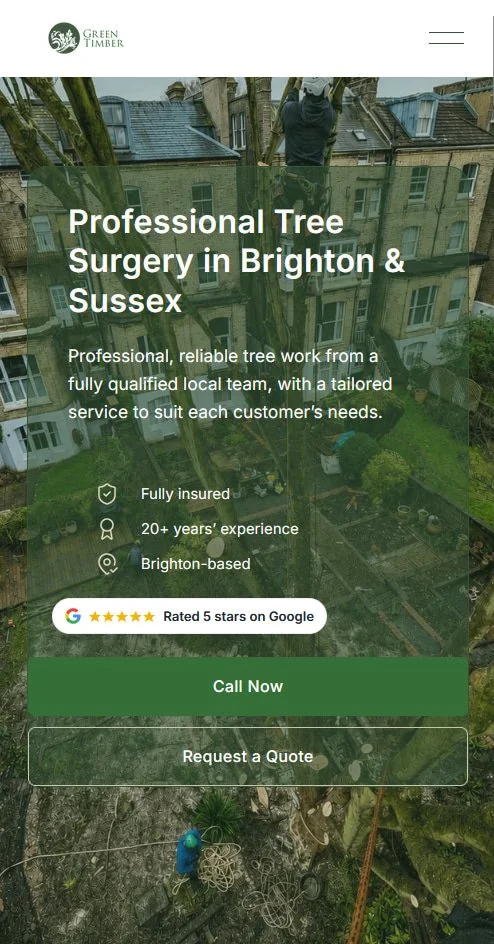
The mobile homepage keeps the service, Google rating and enquiry options clear from the moment a visitor lands on the site.
Aligning the website and Google Business Profile
Green Timber already had a strong Business Profile, but it wasn't fully developed or aligned with the site. I reviewed the categories, services, description, hours, imagery and review responses.
Adam also asked me to reply to several new Google reviews on behalf, which turned into a useful working example of how the business could thank customers without sounding generic.
The new site backs this up by putting the Google rating front and centre on the homepage and linking to the profile from the footer and contact journey throughout.
I also fixed the contact form. The old setup could get flagged as suspicious by Google Workspace and routed straight to spam, meaning genuine enquiries could quietly vanish without anyone noticing. That's fixed now.
The Result
The site went live through a controlled DNS change. Domain and email stayed with 20i to avoid any risk to Adam's business email.
GA4 was set up before launch, a new sitemap submitted through Search Console, and the main pages sent for indexing. Four weeks on, Google had crawled and indexed the important new pages, the redirects were working, and the site's existing search visibility had held broadly steady.
Clicks softened slightly during the migration, which isn't unusual, while impressions rose as Google tested the new structure across a wider set of searches.
It's too early to claim anything about long-term SEO growth, or whether the new site will smooth out Green Timber's winter seasonality. What matters right now is that a fragile, unsupported website has been replaced without losing the visibility it took years to build.
Green Timber now has a site that's stable, mobile-friendly and easy to manage. It explains the business more clearly, connects properly with the Google Business Profile, and gives it a stronger foundation for local and organic search going forward.
Adam's since come back to me with a few other things outside the original brief, including, memorably, sourcing satellite imagery for a job.
“Jonny rebuilt our website and moved us over to Squarespace. He made the whole process clear and straightforward, and took care to make sure the changeover was handled properly because the old site was already showing on Google. We’re really happy with the finished website and would recommend him.”
Adam King, Green Timber Tree Surgery
Need a website like this?
I help small businesses replace fragile or outdated websites without losing what's already working: clear structure, mobile usability, practical SEO foundations and careful migration.
Get in touch to talk through what's needed.